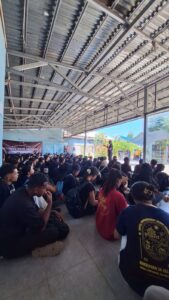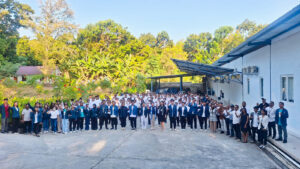

LABUAN BAJO – The Diploma III Ecotourism Study Program of Politeknik eLBajo Commodus (PLC), Labuan Bajo, conducted a benchmarking visit to the Diploma III Ecotourism Study Program at Politeknik Cristo Re, Maumere, Sikka Regency, from July 13–15, 2026. The initiative aimed to strengthen inter-institutional collaboration through the exchange of information, experiences, and best practices in study program management to support the continuous improvement of vocational higher education.
Through this benchmarking activity, both institutions not only exchanged strategies for delivering quality education but also established a collaborative network expected to foster innovation in curriculum development, study program governance, and the enhancement of graduate competencies aligned with the needs of the tourism industry and the evolving workforce.
During the three-day program, the delegation from the Diploma III Ecotourism Study Program of Politeknik eLBajo Commodus engaged in intensive discussions with the leadership and faculty members of the Diploma III Ecotourism Study Program at Politeknik Cristo Re. Key topics included the implementation of an Outcome-Based Education (OBE) curriculum, teaching and learning processes, quality assurance systems, partnerships with industry stakeholders, and strategies for improving program accreditation.
In addition to the discussion sessions, participants shared experiences related to fieldwork management, the implementation of the Tri Dharma of Higher Education—education, research, and community service—and strategies for developing student competencies to address the growing demands of the tourism sector, particularly in ecotourism.
The Head of the Diploma III Ecotourism Study Program at Politeknik eLBajo Commodus stated that the benchmarking activity served as a strategic opportunity to gain valuable insights and inspiration for improving the quality of academic program management.
“Through this benchmarking program, we have gained many best practices that can be adapted to meet our institution’s needs. We also hope this collaboration will continue to expand through various initiatives in academics, research, and community engagement,” he said.
For Politeknik Cristo Re, the activity also marked an important opportunity to strengthen collaboration among vocational higher education institutions that share a common vision of producing competent and globally competitive graduates. The exchange of experiences among faculty members and program administrators is expected to generate innovations that will contribute to improving the quality of educational services.
More than just an academic visit, the benchmarking program is expected to serve as a foundation for broader collaboration in the future, including joint academic activities, faculty and student exchange programs, collaborative research, and the expansion of partnerships with industry and business sectors.
One of the participating lecturers remarked that the opportunity to engage in direct discussions with fellow Ecotourism Study Program administrators provided valuable new perspectives on addressing the challenges of managing vocational education.
“We recognize that every institution has its own unique strengths. Through initiatives like this, we can learn from one another, support each other, and work together to enhance the quality of education in order to produce graduates who are well prepared to contribute to the development of sustainable tourism,” the lecturer said.
This benchmarking activity reflects the strong commitment of both institutions to fostering a culture of collaboration, sharing best practices, and continuously improving the quality of vocational higher education. Ultimately, it aims to develop highly competent human resources who are well equipped to support the advancement of Indonesia’s ecotourism sector.